A cloak of red, slow as a Carpathian rock
Every Sheep Farmer Needs an Artist
Commissioned by River Valley Arts Collective
Curated by Marisa Espe
April 13-June 9, 2024
This project was supported, in part, by the Foundation for Contemporary Arts Emergency Grant. The artist gratefully acknowledges the MacDowell residency program where she developed this project; and is thankful for generous donations of wool from Turkana Farms and leaf lard from Fat Apple Farm.
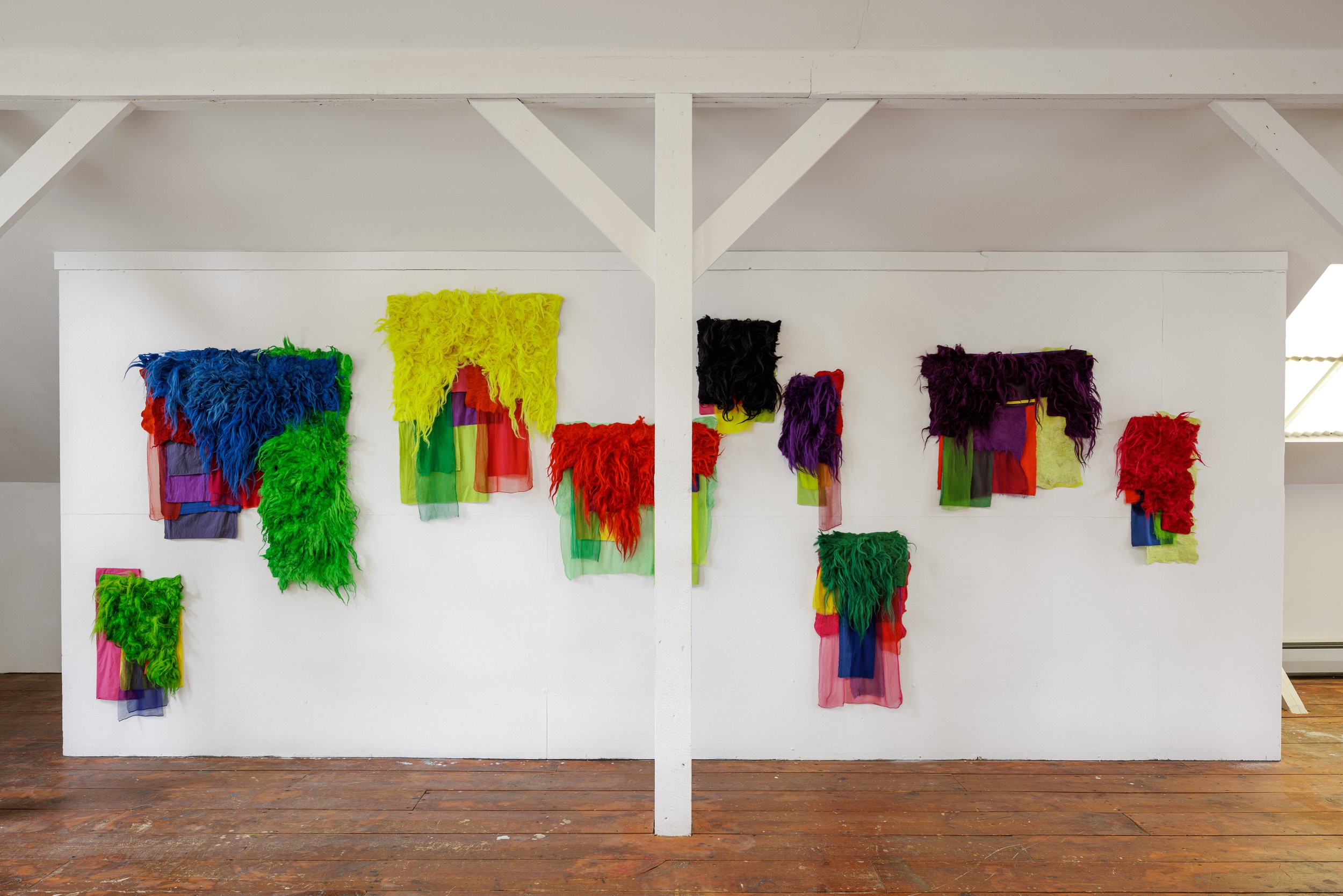
Váradi’s practice pays homage to the labor of sheep farming communities, past and present, including her family whose origins are rooted in the Carpathian Mountains. For these remote residents, a subsistence-level lifestyle to maintain food and shelter and survive extreme mountain conditions preoccupies daily existence, yielding traditions of labor the artist aims to preserve and honor. Memories from visiting her great-grandparents–cold quiet walks in the mountains, scents of wool and lard, and folk textiles in vivid colors–are animated and imbued in the new works.
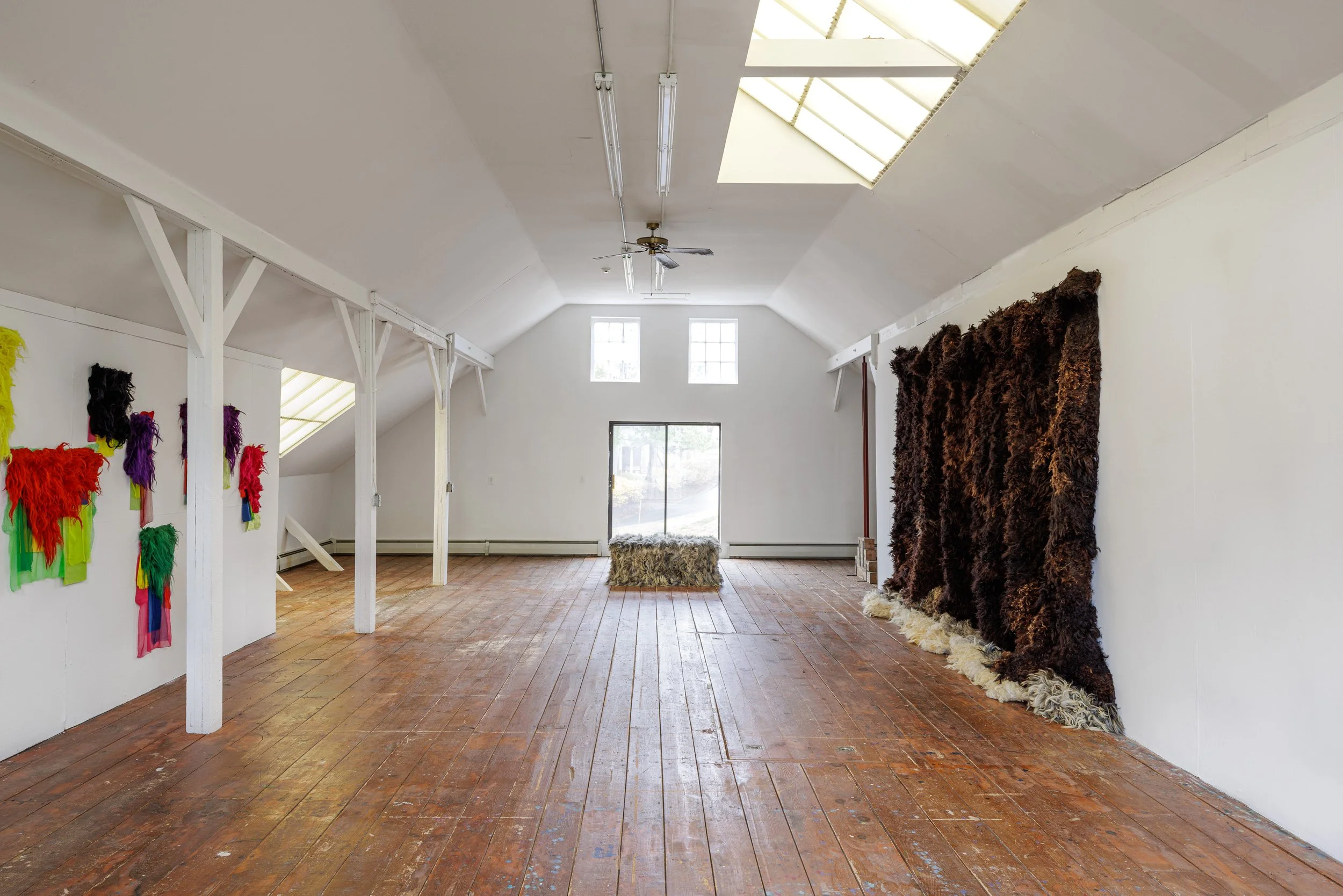
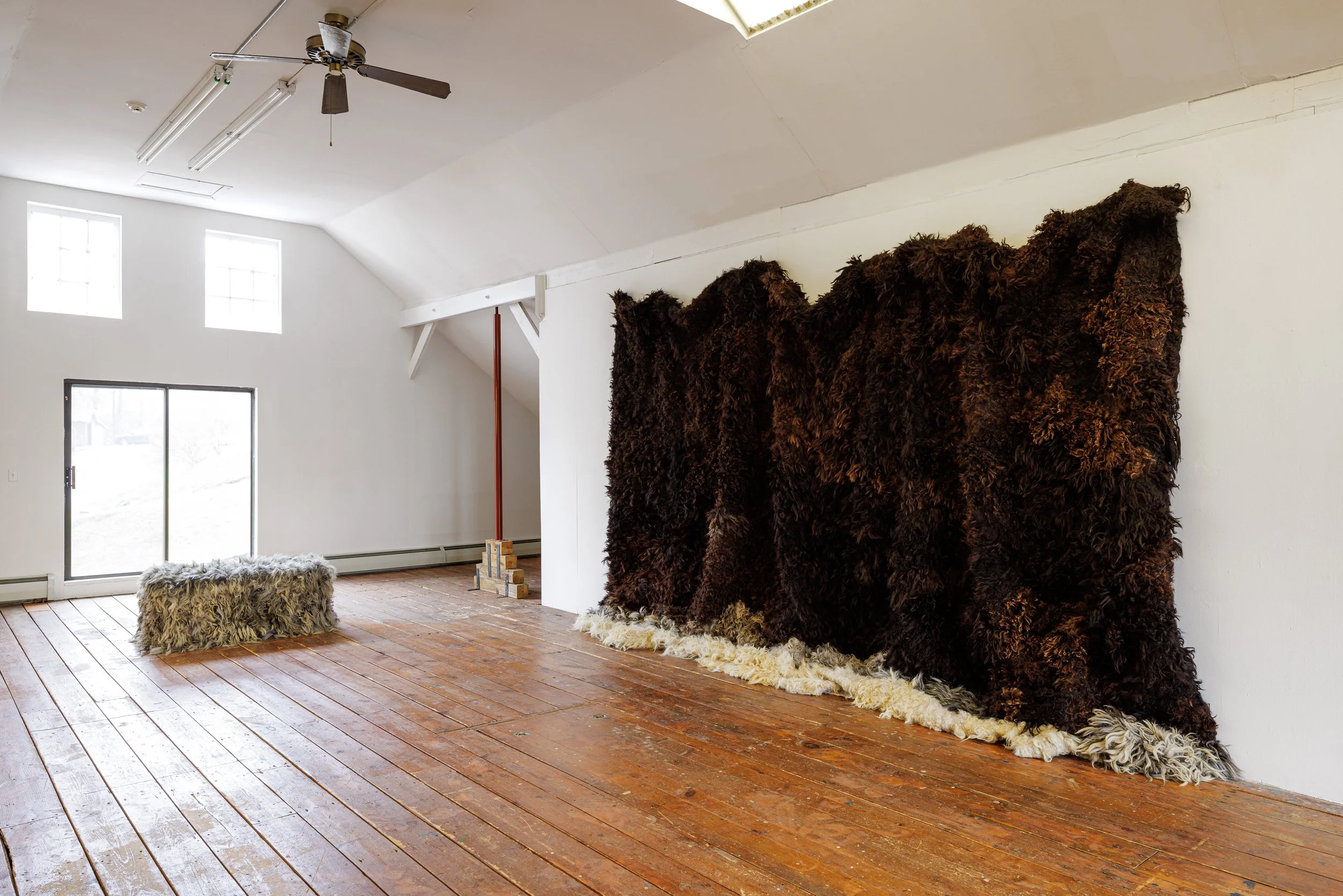
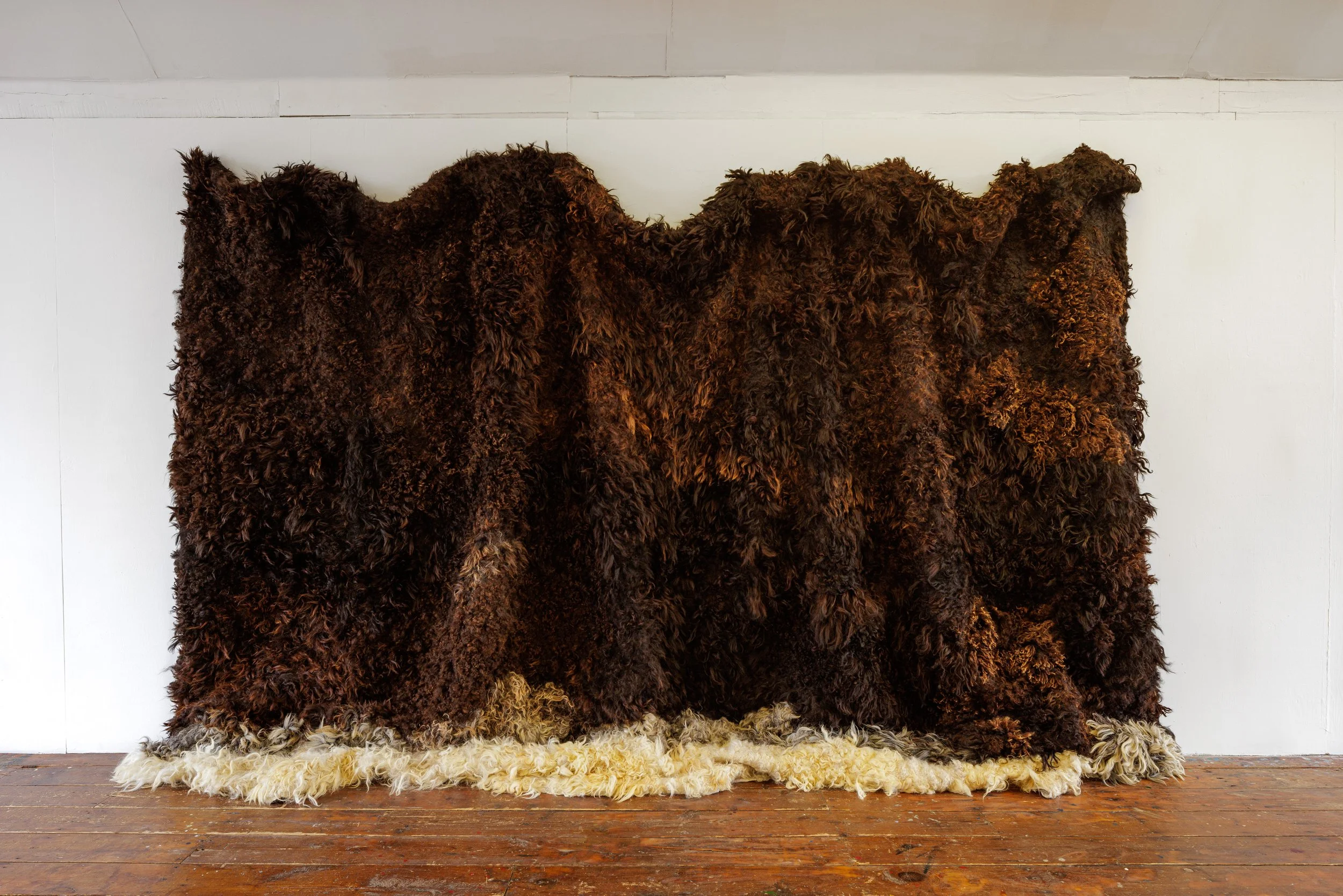
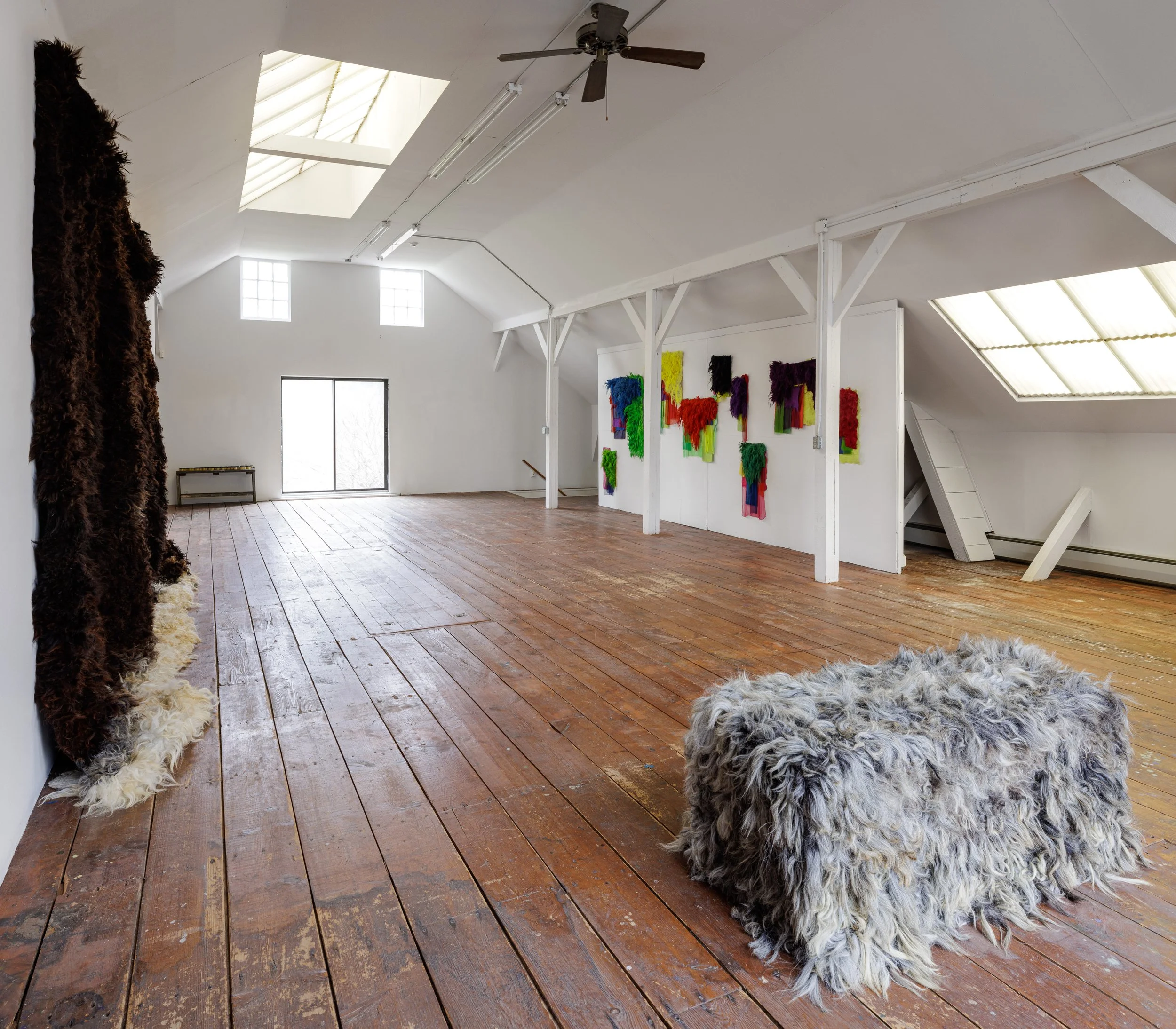
The exhibition is anchored by two wall installations that showcase the artist’s unique felting technique–a physically demanding and time-intensive process. A large-scale felted work of natural, undyed wool spans the length of one wall in Al Held's former drawing studio. Part textile and part painting, Váradi composed it by placing individual tufts of the raw wool arranged according to color, texture, and length. Part cloak, the work recalls a hunia, a traditional Carpathian wool garment worn as protection against the severe mountain climate but also as ceremonial dress, incorporated into baptisms and weddings. Part animal, the work’s materiality is foregrounded, while it also assumes a life-like presence within the space.
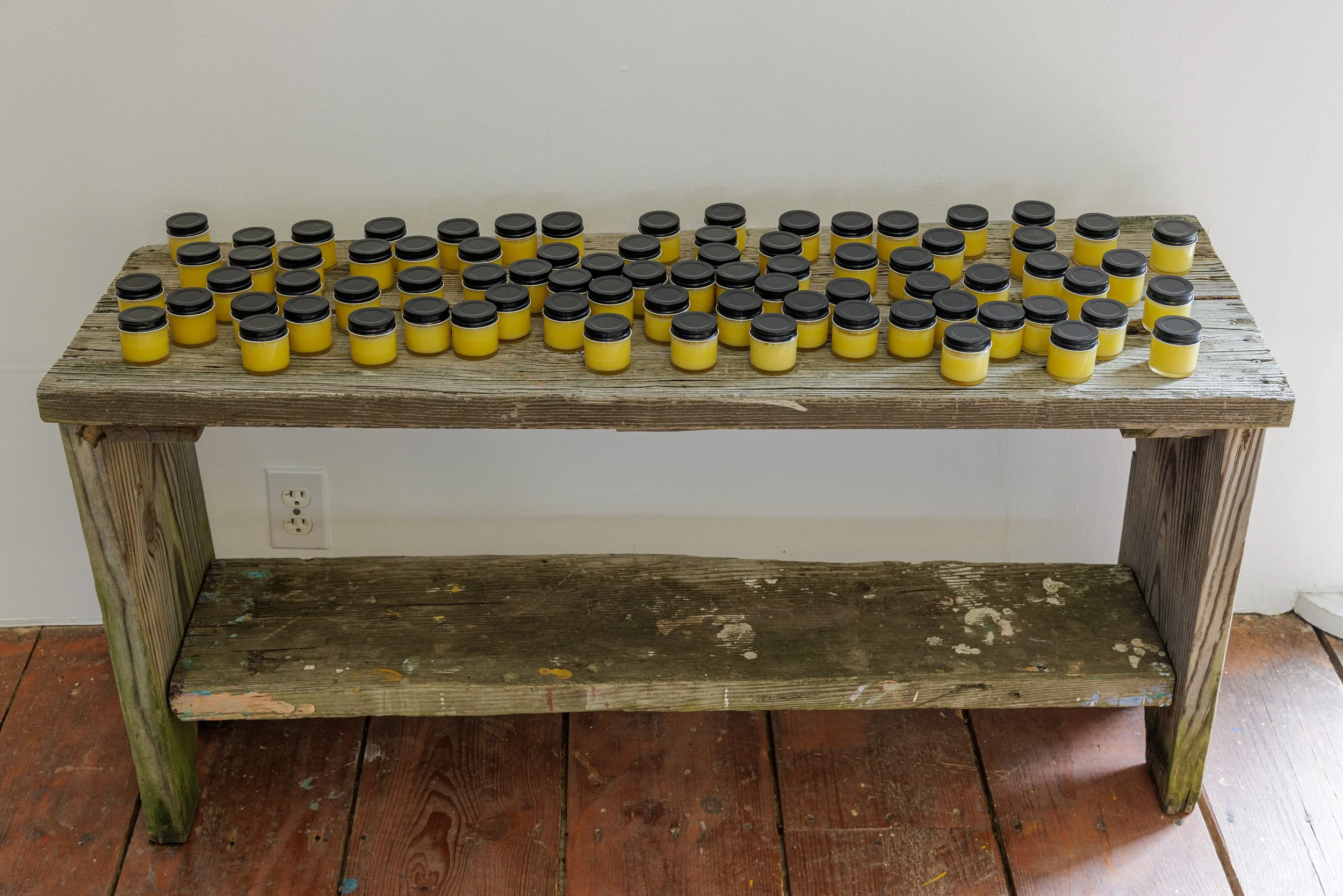
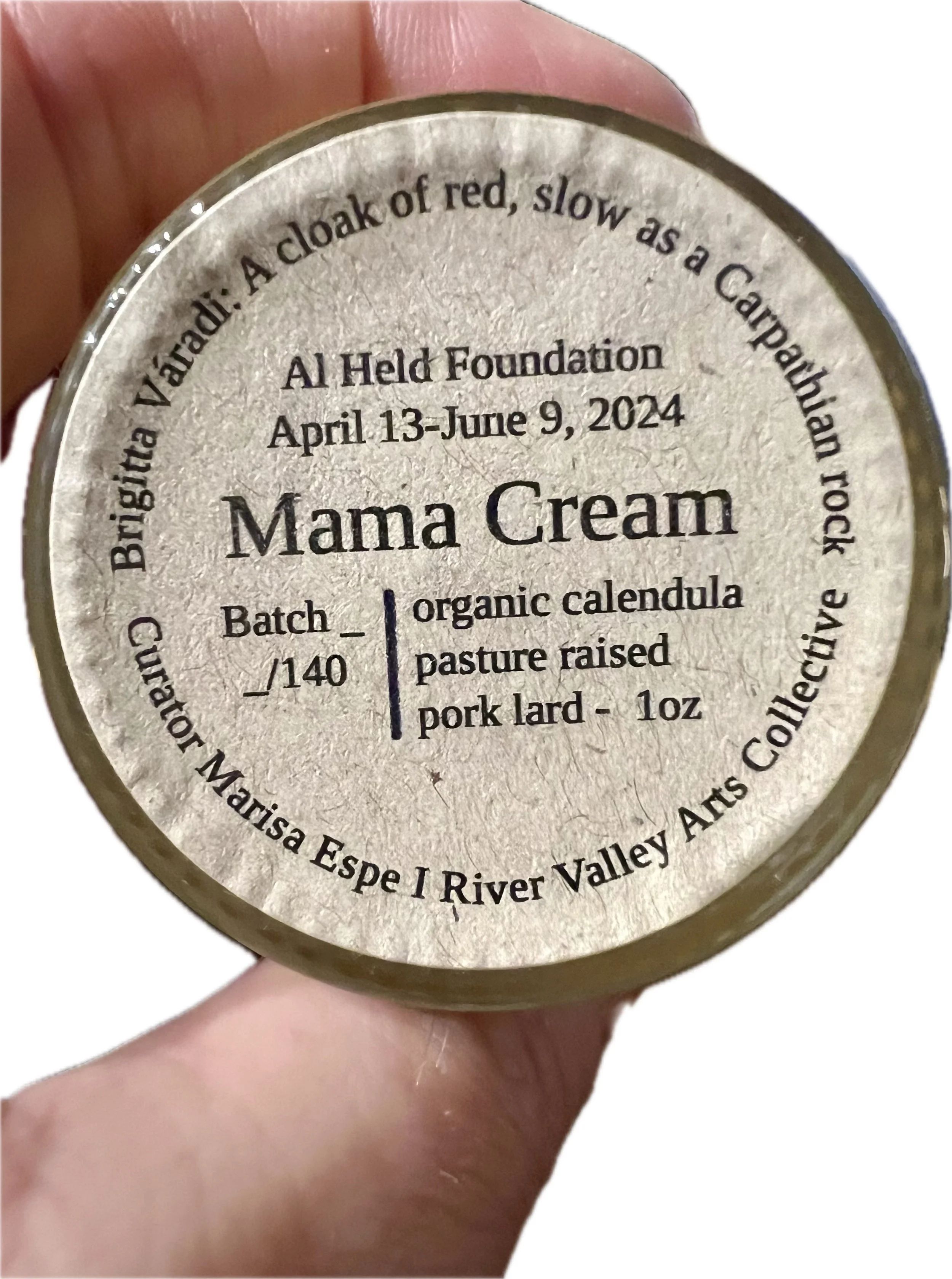
In addition, and in the spirit of generosity, the artist hand rendered and produced a cream, individually jarred for visitors to take. The cream is a traditional folk remedy one would apply to the chest for colds or a part of the body in pain. Váradi’s grandmother adapted a recipe inherited from her godmother, who was the village medicine woman and midwife. Made of pig lard and both wild and cultivated calendula from her grandmother’s garden, it is lovingly referred to as “Mama Cream.” The artist intends for a piece of her family’s heritage–which Váradi has only recently begun to activate as a catalyst for her work–to be shared, drawing resonances between traditions, memory, and the present.
Photography by Alon Koppel